Contact icon

Get in contact

Coverplate

From innovation to API production

The future of API manufacturing is driven by flexibility. The focus is shifting from traditional, fixed manufacturing systems to intelligent solutions that can respond quickly to new molecules, smaller batch sizes and changing market dynamics.

By combining parallel synthesis, process development and scalable reactor platforms, an efficient route from concept to production is created.

Controlled upscaling requires not only reliable reactor technology, but also process knowledge and flexibility — even when processes are moving towards cGMP production and cleanroom applications. Reaction conditions that are successful on a small scale must be able to be scaled up reproducibly without critical parameters such as temperature, pressure, mixing and heat transfer becoming unbalanced.

For R&D and process engineers, this means that process knowledge must be built up right from the initial development phase. Parallel synthesis makes it possible to investigate multiple reaction conditions simultaneously and gain a quicker understanding of the optimal process parameters. The process can then be scaled up step by step, from small volumes through pilot scale to representative production.

This means that the transition from a promising molecule to a commercial API is not only faster, but also better substantiated.
Maximum flexibility during process development and production

Each development phase requires a different reactor configuration. Modular reactor platforms offer the flexibility to develop and scale up processes efficiently, and to adapt them to the challenges of tomorrow.
That is why Suurmond, with reactor solutions from BÜCHI and parallel synthesis technology from SYSTAG, offers solutions that scale with the process.

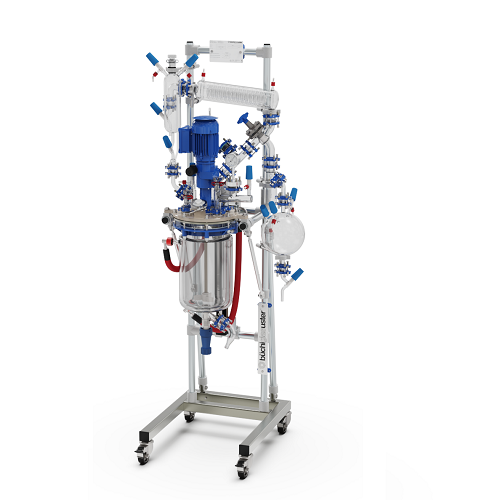
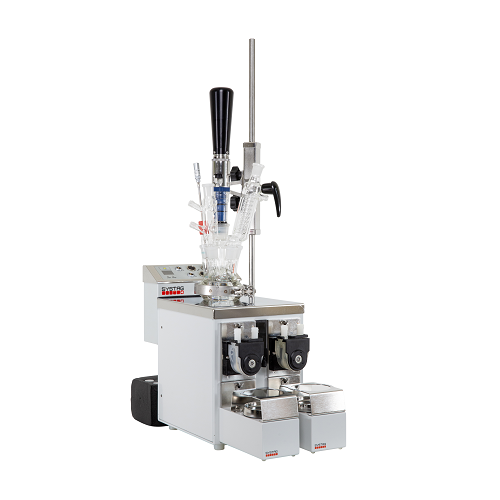
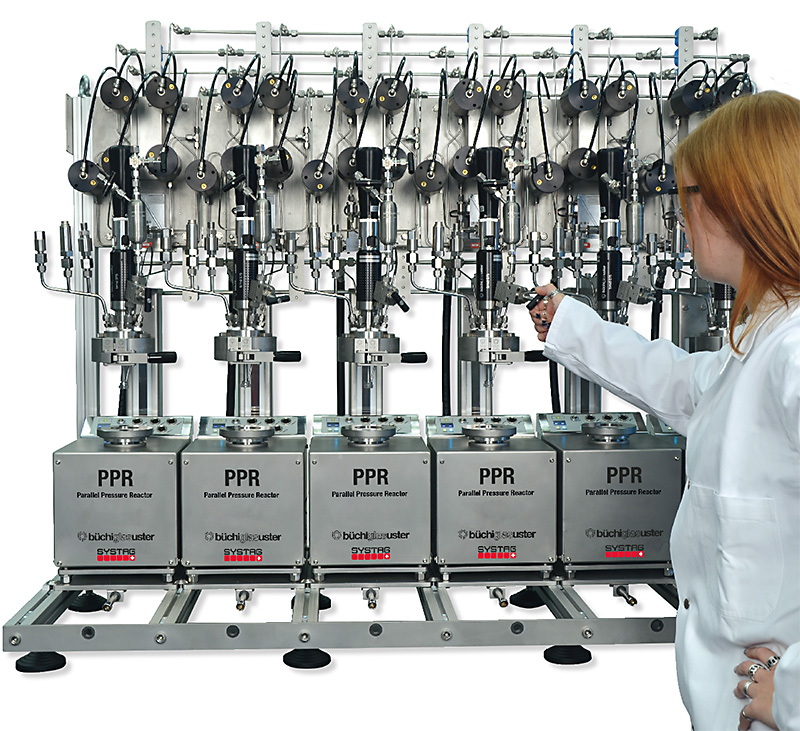
The SYSTAG Flexycube enables multiple reactions to be carried out in parallel and process parameters to be compared efficiently. For further development and upscaling, BÜCHI reactors are available, ranging from the miniPilot and midiPilot to medium-scale pressure reactors. These enable R&D and process engineers to investigate and optimise processes under increasingly representative conditions.

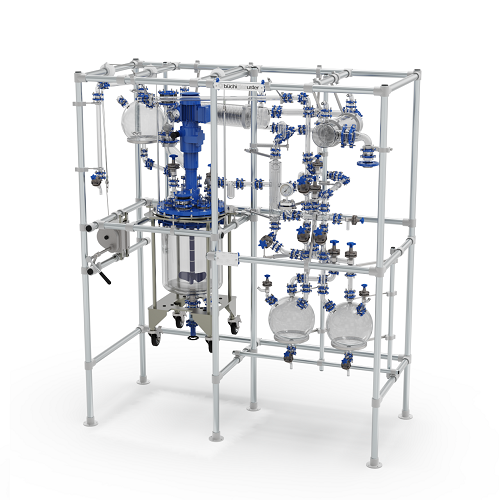
Suitable configurations and cleanroom options are also available for applications involving cGMP requirements and controlled production conditions. This creates a scalable development pathway from screening and process optimisation through to pilot-scale and production — with the right reactor for every stage.

From screening to production. From molecule to API. Success starts with the right reactor at the right time.

Technical specifications of our API reactors

GLASS REACTORS:
Volume up to 250 litres / 10,000 litres for production
Pressure -1.0 (FV) to + 0.5 bar
Temperature -90°C to +200°C
Glass construction DN 15 - DN 600 components
Materials Borosilicate glass 3.3 / glass-coated steel / PTFE / PFA / tantalum
Certification cGMP / FDA / ATEX / CE / CIP
PRESSURE REACTORS:
Volume up to 500 litres
Pressure up to 500 bar
Temperature up to 500°C
Materials RVS/ Hastelloy/ Tantaal/ Titanium/ Zirconium/ etc.
Certification PED/ AD2000

Frequently asked questions about API production using scalable reactors

Active Pharmaceutical Ingredients (APIs) are the biologically active chemical components responsible for a drug’s therapeutic effects. Producing these active molecules often involves intricate, multi-stage chemical reactions that require specialized processing technologies.

Reactor systems are essential to this process, acting as controlled vessels where chemical synthesis takes place. They play several critical roles in API manufacturing:

  • Environmental Control:
    Maintain precise temperatures, pressures, and agitation speeds to optimize reaction rates and ensure high product purity.
  • Safety Management:
    Contain hazardous materials, corrosive reagents, and volatile heat changes standard in multi-step chemical reactions.
  • Quality & Compliance:
    Deliver consistent batch-to-batch production that adheres to strict Good Manufacturing Practice (GMP) regulations.

Scalability ensures that a chemical process can evolve in a controlled manner from laboratory development to production. By using suitable reactors at each stage of development, critical process parameters such as temperature, pressure, mixing and heat transfer can be reliably validated.

Modular reactor platforms offer flexibility during process development and production. They make it possible to switch quickly between different chemical processes, batch sizes and process conditions, without having to design a completely new system each time.

MiniPilot systems bridge the gap between laboratory experiments and larger pilot-scale operations. They provide valuable process data on reactions, safety and reproducibility, enabling upscaling to larger reactors to be carried out more efficiently and with less risk.

A midiPilot reactor is used when a process needs to be tested under conditions that are more representative of production. This scale makes it possible to further optimise process parameters and confirm the feasibility of upscaling.

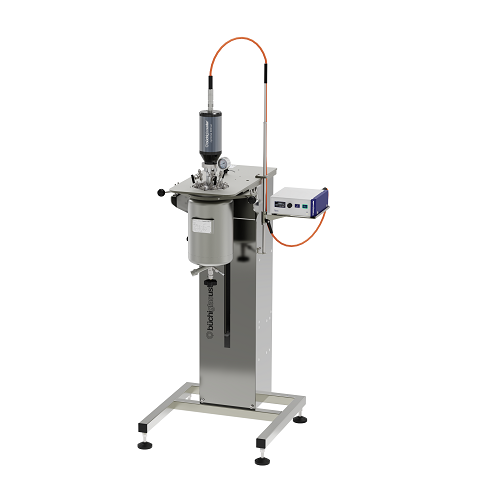
Medium-scale pressure reactors make it possible to carry out complex reactions, such as high-pressure processes and hydrogenation, safely and in a controlled manner on a scale relevant to further production development. They provide insight into a process’s performance before larger investments are made.

With the right reactor at the right time, processes can be developed, validated and scaled up more quickly. A well-chosen reactor solution reduces development risks and speeds up the transition from initial experiments to reliable production.

Key parameters include:

  • Temperature control
  • Pressure control
  • Mixing quality
  • Heat transfer
  • Choice of materials
  • Safety
  • and reproducibility.

Successful upscaling requires that these factors remain controllable at every scale.

The market is increasingly demanding smaller batches, new molecules and faster process adjustments. Flexible reactor platforms make it possible to respond efficiently to changing needs and new developments within the pharmaceutical industry.

Coverplate

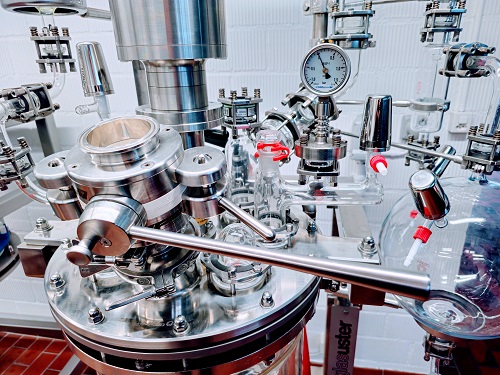
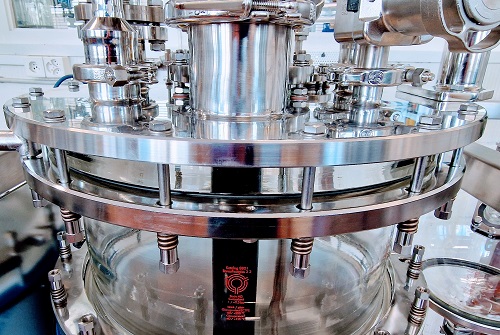
Hastelloy cover plate for a reactor, compliant with API, cGMP and cleanroom standards

FlexyCUBE reactor system

FlexyCUBE glass reactors for rapid API screening

Reactors for parallel synthesis type PPR with steel reactor vessels for reactions under pressure

PPR parallel pressure reactors for rapid screening

Complete glass mini pilot plant

miniPilot reactor

Büchi glass chem reactor type GR60

chemReactor for upscaling and production

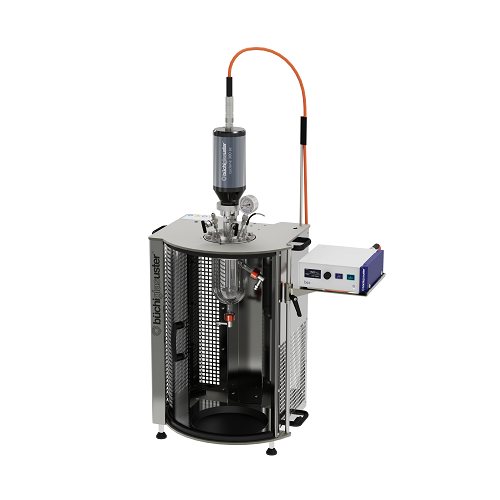
Lab pressure reactor system

Polyclave pressure reactor with a 1-litre type 1 reactor vessel

high pressure reactor with tilting mechanism

kiloclave pressure reactor with a 10-litre reactor vessel

HPAPI reactor system with a shut-off valve for containment

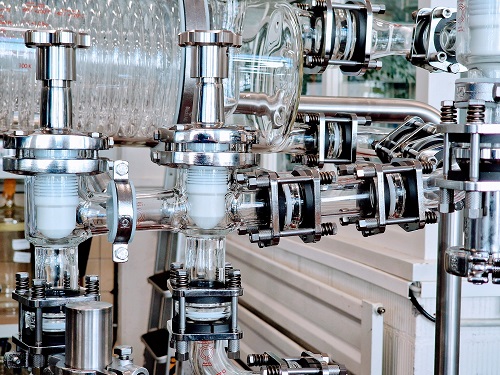
Glass valves for HPAPI process equipment

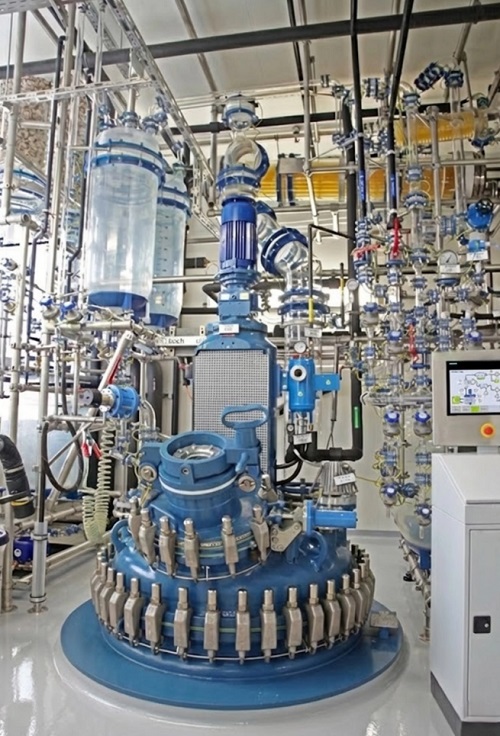
Production-scale process equipment for, for example, APIs